At the risk of sharing too much of how the salami is made, as they say, I will confess that it’s not always easy to find material for #TuesdayTorahTutorsTidbits. This is not because there’s no learning to showcase (God forbid!) but because (thank God!) our tutors are busy teaching and don’t always think to share what they’ve done with me. I have of course used a lot of my own material, but I prefer more variety in the material, skills, and approaches I share, so I do what I can to extract others’ gems.
One tutor, Leah, is currently learning with a number of students and regularly shares her material with me, in the form of Google slideshows. The students are all beginners, in a sense, but they’re very different. Two are younger and their goals for now are about mastering the basics of Hebrew language: one has been focusing on vocabulary, while the other is still diligently adding one letter or vowel at a time to his reading repertoire. What the two of them have in common, however, is that they come from families with strong Jewish identities and practice; the kids’ Hebrew might not be great, but they’re immersed in Jewish life. The two older students are siblings who are really brand new to it all.
Why do I share this? Not only to brag about the range of students we teach (this sample wouldn’t begin to do it justice!), but to reflect on the range in how we can approach Torah learning so that everyone gets what they need from it.
I opened up two slideshows from Leah today, each titled “Purim.” (She must have them in separate folders, to be able to tell see which is which without opening them!) The first, for the young student learning Hebrew vocabulary, consisted of six slides with pictures of items related to Purim and nothing else; they used the pictures to review Purim-related words such as ra’ashan (grogger), maseicha (mask), and oznei Haman (hamentashen).

The material was basic, but the student already had an idea of the story and was able to play games with that previous knowledge to facilitate further learning and review.
“Purim” slideshow number two was very different. For the older siblings, learning about Purim for the very first time, Leah created fifteen slides that told the Purim story from scratch in a fun, lighthearted way.
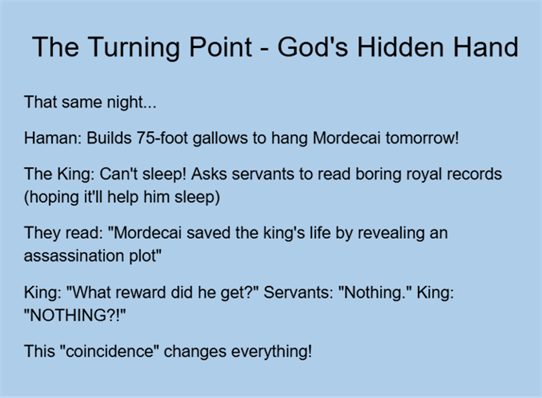
There was a lot more information here (information that the younger student likely already knew), and the games were replaced by discussion of deeper questions and themes. Leah organized these (with some in the slideshow and some for herself as a guide) into four categories, each of which included 4-5 items. (I will share just a few, so as not to give away all her secrets!)
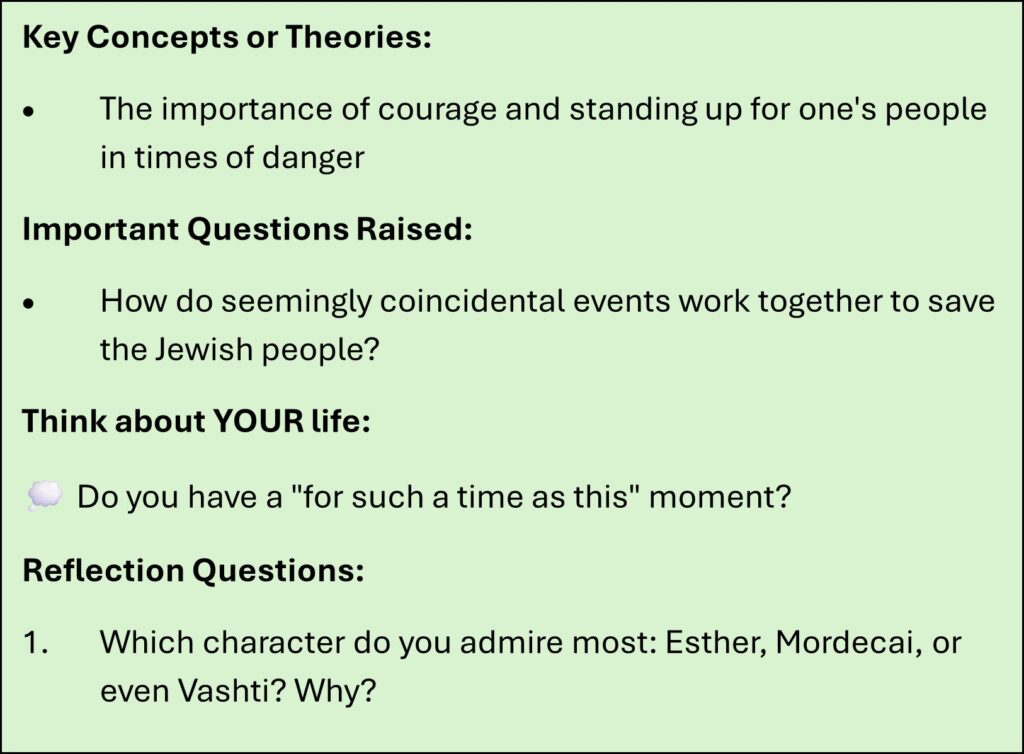
Usually, I try to use #TuesdayTorahTutorsTidbits posts to showcase just one small piece of #realTorah from among many and varied #realTorahTutorssessions. This time, the shared title of the two slideshows really struck me and I was inspired by the contrasting parallels in these two Purim plans. Of course, there are many more ways to teach Purim than these as well: I have fond memories of my own quasi-beginner “tweenage” student, and how we expanded her understanding of the familiar story by looking more closely at the text that tells it; with another long-term student, an adult, I explored the character of Esther in particular, through careful reading of the Megillah along with its commentaries. There is so much to learn, and there are so many ways to do it!
Sharing these tidbits seemed to me a great way to showcase the individualized learning at the heart of TorahTutors.org. We are privileged to learn with students of any age and any background, meeting each student where they are and creating engaging learning just for them.